As an Amazon Associate, we earn from qualifying purchases. Some links on this site are affiliate links at no extra cost to you. Our recommendations are based on thorough research and editorial judgment.


The Science of Sharp: What Happens to Steel at the Microscopic Level

At some point, you’ve probably wondered why your knife doesn’t cut like it used to. That’s where the science of steel comes into play. At the microscopic level, what’s inside that blade matters a lot more than you might think.
You may be interested


For starters, if a steel blade has higher carbon content—around 0.95-1.5%—it forms something called carbides. These are super helpful for keeping an edge sharp longer.
Then there’s the heat treatment process. It’s not just about getting that knife hot; it helps convert austenite to martensite. This boosts hardness, but here’s the catch: tempering is just as crucial because it maintains toughness, preventing the blade from becoming too brittle. Both aspects are key to a knife that performs well.
But let’s not forget edge geometry. The angles of the bevel can really make a difference in how well your knife slices through food. The sharper the angle, the better the cut, but too steep can lead to a fragile edge.
So, it’s about finding that balance.
So, why does this matter? Understanding these details not only helps you take care of your knives but also improves how you use them. That’s where the real value lies.
The best part is that by being mindful of these elements, you can enhance your knife skills. Got a favorite knife that needs some TLC? Dive deeper into how different steels and sharpening angles work, and you might just rediscover it in a whole new light!
In summary, knowing a bit about your knife’s makeup can change the way you approach meal prep. What’s your go-to knife, and how has it held up over time?
Key Takeaways
- The microscopic structure of steel consists of grains, with smaller grain sizes generally leading to improved hardness and edge retention.
- Carbides formed during heat treatment enhance wear resistance and stability, contributing to longer-lasting sharp edges.
- Quenching transforms steel’s microstructure, converting austenite to martensite, resulting in increased hardness but potential brittleness.
- Tempering reduces brittleness while maintaining hardness, allowing for improved toughness in blade performance.
- Edge geometry at the microscopic level influences the distribution of force during cutting, affecting sharpness and overall knife efficacy.
The Fundamental Nature of Sharpness

Are you tired of your cutting tools not performing as well as you’d like? Let’s dive into what makes a knife or scissors really sharp. The secret lies in how thin the edge is. A thinner edge can concentrate force better, which means you’ll get smoother cuts. But here’s the kicker: it’s not just about being thin. An edge that can chip or deform will only let you down, especially when you’re in a pinch.
You’ve probably heard about steel hardness, often measured on the Rockwell scale (HRC). Higher HRC values usually mean better edge retention, but be careful—if the steel’s too hard, it can chip easily. Choosing the right steel composition can enhance that sharp edge you’re after. For instance, carbon boosts hardness, while elements like chromium add strength.
Now, let’s talk edge geometry for a minute. Low-angle edges (like 10°–20°) are known for cleaner cuts, perfect for delicate work. But on the flip side, higher angles (25°–35°) offer more toughness, ideal for tougher tasks. It really boils down to how you plan to use your tool.
Honestly, picking the right tool for your needs can make all the difference. Sharpness isn’t just a feature; it’s a must-have for getting the job done efficiently. So, next time you’re choosing a cutting tool, think about these factors. What’s most important for your tasks? Also, just as wood handles enhance grip and shock absorption in hammers, the right material choice is crucial in cutting tools for optimal performance and durability, similar to how handle material quality affects tool effectiveness.
How Steel Composition Affects Knife Performance

When you’re picking out a knife, have you ever paused to think about what actually makes a knife perform well? Understanding steel composition is crucial, and here’s why. The carbon content in the steel really impacts how hard the blade is and how well it holds an edge. If you’ve got a higher carbon steel (think 60 HRC and above), you’re looking at fantastic edge retention, but there’s a catch—it can also be pretty brittle. Conversely, lower carbon content means you get softer blades that are easier to sharpen, but they just don’t last as long.
And then there’s the whole alloying elements thing to consider. Take chromium, for example. It gives your knife a boost in corrosion resistance, which is super important if you’re using it in the kitchen or outdoors. Vanadium is another player; it helps form carbides that enhance edge retention. So, why does this matter? By balancing the hardness and toughness through smart steel choices, you can choose a knife that’ll excel in all kinds of cutting tasks and stand the test of time.
When you’re in the market for a knife, think about what you’ll be using it for. If it’s for everyday kitchen tasks, you might want something that balances sharpness with the ability to resist rust. On the flip side, if you need a knife for tougher outdoor duties, a harder blade might serve you best, even if it requires a bit more care.
The best part is that knowing how steel composition influences knife performance can really inform your decision. Remember, a great knife isn’t just about looks or price; it’s about how it holds up with repeated use. So, as you shop around for your next kitchen tool, keep these factors in mind. Do you have a go-to knife for cooking or outdoor adventures? Using quality sharpening systems regularly can help maintain the optimal edge your steel composition allows.
Recommended Products

WÜSTHOF CLASSIC SERIES – 36-Piece deluxe knife set with full tang triple riveted synthetic polypropylene handles that resist fading, discoloration, heat and impact. The WÜSTHOF Classic Series has been our best-selling series for generations.

Knife set includes 2.75" Peeling Knife, 3" Flat Cut Paring Knife, 3.5" Paring Knife, 4.5" Utility Knife, 5" Hollow Edge Santoku Knife, 5" Serrated Utility Knife, 6" Chef's Knife, 6" Carving Fork, 6" Utility Knife, 7" Flexible Fillet Knife, 7" Hollow Edge Santoku Knife, 8" Bread Knife, 8" Carving Knife, 8" Chef's Knife, 10" Super Slicer, Eight matching Classic Ikon 4.5" Steak Knives, 9" Honing Steel with Stainless Handle, Brushed Stainless Steel Come-Apart Kitchen Shears and 25 Slot Acacia Block
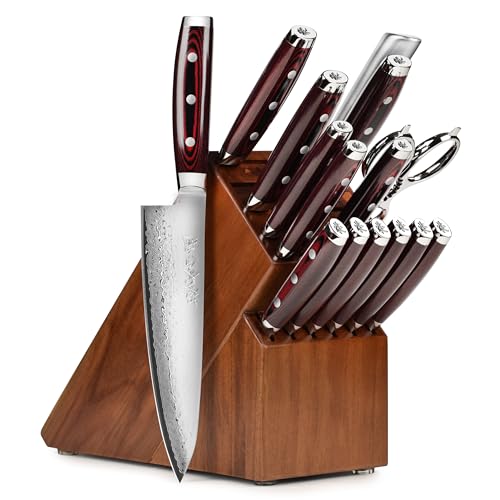
Set includes a 4" Paring Knife, 4.75" Petty Knife, 6" Utility Knife, 6.5" Santoku Knife, 8" Chef's Knife, 9" Bread Knife, 9" Slicing Knife, Six 4.5" Steak Knives, 10" Honing Steel, Stainless Steel Take-Apart Kitchen Shears and 17 Slot Acacia Knife Block
How Carbides Improve Edge Retention in Knives

Are you tired of your knives dulling too quickly? Understanding carbides can be the key to finding knives that hold their edge, making your time in the kitchen much more enjoyable.
Carbides are these hard, wear-resistant particles that form during heat treatment. When steel has about 0.95-1.5% carbon, it promotes the right conditions for forming carbides. This means your blade can retain its sharp edge for a longer time. So, when you’re slicing through tougher foods, you won’t have to worry as much about constantly sharpening.
What adds even more to the mix are alloying elements like chromium, molybdenum, and vanadium. They create finer carbides that boost edge stability and reduce chipping. Ever heard of high vanadium concentrations? They lead to extremely fine carbides that excel in high-performance settings. And who doesn’t want a knife that can handle whatever you throw at it?
Now, let’s talk heat treatment. Getting that right is crucial for proper carbide distribution. It’s like getting the secret recipe just right; too much or too little can ruin the batch. If the heat treatment is off, then all those great carbidic benefits might not be fully realized.
So, why does this matter? Well, a sharper blade translates to a better cutting experience, plain and simple. Whether you’re starting off in your culinary journey or consider yourself a seasoned chef, knowing about carbides can steer you toward smarter knife choices. For maintaining that sharpness, using tools like diamond sharpening stones can help preserve the carbide-enhanced edge longer by providing precise and consistent sharpening.
Recommended Products

Global Knife Set Includes: 3.5" Paring Knife, 4.25" Utility Knife, 5" Prep Knife, 5.5" Hollow Edge Nakiri Knife, 6" Flexible Boning Knife, 6" Serrated Utility Knife, 7" Hollow Edge Nakiri Knife, 7" Hollow Edge Santoku Knife, 8" Chef's Knife, 8" Hollow Edge Carving Knife, 8.5" Bread Knife, Six 4.5" Fine Edge Steak Knives, 8.5" Ceramic Sharpening Rod, Stainless Steel Kitchen Shears & 19-slot Ash Wood Knife Block with Dark Walnut Finish

Global Knife Set Includes: 4.5" Utility Knife, 5" Chef's Prep Knife, 6" Flexible Boning Knife, 6" Serrated Utility Knife, 7" Nakiri Vegetable Knife, 8" Chef's Knife, 8.5" Bread Knife, 8.5" Ceramic Honing Rod, Global Kitchen Shears & 9 Slot Wood Knife Block with Cement Gray Finish

Global Knife Set Includes: 3.5" Paring Knife, 5" Chef's Prep Knife, 6" Serrated Utility Knife, 7" Hollow Edge Asian Chef's Knife, 8" Chef's Knife, 8.5" Bread Knife, Four 4.5" Fine Edge Steak Knives & 10 Slot Acacia Wood Knife Block
What Does Heat Treatment Do for Your Knife?
Have you ever wondered why some knives seem to perform better than others? The secret often lies in the heat treatment process. It’s more than just getting the steel hot; it’s about transforming its microstructure in a way that makes a real difference in how the knife handles.
When steel is heated above its critical temperature and then quickly cooled or quenched, we change its structure from a softer phase known as austenite to a much tougher phase called martensite. This process significantly increases the hardness of the blade, which is measured on the Rockwell scale. A knife that scores 60 HRC or more will keep its edge longer, but remember, it can also be more prone to chipping if you’re not careful.
So, what’s the next step? Tempering. This is where you reheat the steel to decrease the brittleness while maintaining good hardness. It’s all about finding the right balance. Think of it like tuning a musical instrument; you want it to sound just right when you start using it in the kitchen.
The beauty of heat treatment is that it allows customization. The specific performance qualities of your knife can be tweaked based on the carbon content and other alloying elements. Whether you’re slicing through meat or chopping veggies, this behind-the-scenes process ensures your knife is tailored to meet your needs.
Additionally, bladed tools like chisels often undergo heat treatment using chrome-vanadium steel to enhance their strength and edge retention, demonstrating how this science applies beyond just knives.
Recommended Products

Knife set includes 3" Flat Cut Paring Knife, 3.5" Paring Knife, 4.5" Utility Knife, 5" Boning Knife, 5" Hollow Edge Santoku Knife, 5" Serrated Utility Knife, 6" Chef's Knife, 6" Utility Knife, 7" Hollow Edge Santoku Knife, 8" Bread Knife, 8" Carving Knife, 8" Chef's Knife, Eight matching Classic Ikon Creme 4.5" Steak Knives, 9" Honing Steel with Brushed Stainless Handle, Stainless Steel Come-Apart Kitchen Shears and 22 Slot Beechwood Knife Block (complete set; all slots in block are filled)

Knife set includes 3" Flat Cut Paring Knife, 3.5" Paring Knife, 4.5" Utility Knife, 5" Hollow Edge Santoku Knife, 5" Serrated Utility Knife, 6" Chef's Knife, 6" Utility Knife, 7" Flexible Fillet Knife, 7" Hollow Edge Santoku Knife, 8" Bread Knife, 8" Chef's Knife, 9" Hollow Edge Carving Knife, Eight Classic Ikon 4.5" Steak Knives, 9" Honing Steel with Brushed Stainless Handle, Stainless Steel Come-Apart Kitchen Shears and 22 Slot Beechwood Knife Block (complete set; all block slots are filled)
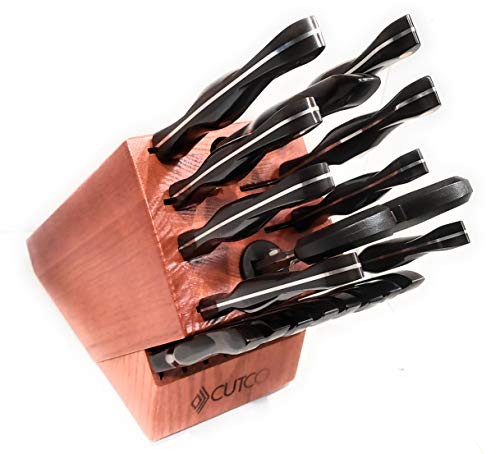
America's #1 Brand in Quality Cutlery for Over 50 Years
Edge Geometry: The Best Bevel Angles for Sharpness
Finding the right bevel angle for your knife can seem like a big task, but it’s essential for how well your knife performs. Ever thought about why some knives cut through things effortlessly while others struggle? Lower angles, around 10° to 20°, give your knife that razor-sharp edge. This is the kind of angle you’ll usually find on Japanese knives or chef knives, and they’re fantastic for precision cutting when you need to be exact.
Now, if you’re looking for a balance between sharpness and durability, consider mid-angle bevels of 20° to 25°. These are ideal for everyday carry knives or those multipurpose utility blades you have in your toolbox. They can handle a good amount of wear and tear while still keeping a decent edge.
What about those tough jobs? For heavy-duty tasks, you might want to go with higher angles, like 25° to 35°. This is where you’ll find the durability you need for ranch tools or veterinary instruments. So, which bevel angle is best for your needs?
Remember, edge geometry is all about cutting effectiveness. Polished low angles excel when you’re push-cutting, while toothy profiles tackle tougher materials better. Understanding bevel angles can really help you choose the right knife for what you’re doing.
In a nutshell, pick the angle that fits your needs, whether that’s for delicate slicing or rugged use. Using tools with precise alignment ensures these angles are maintained consistently for optimal performance. What do you think your next knife purchase will be based on this?
Recommended Products

Global Knife Set Includes: 3.5" Paring Knife, 5" Chef's Prep Knife, 6" Serrated Utility Knife, 7" Hollow Edge Asian Chef's Knife, 8" Chef's Knife, 8.5" Bread Knife, Global Kitchen Shears & 7 Slot Bamboo Knife Block

Global Knife Set Includes: 3.5" Paring Knife, 5" Chef's Prep Knife, 6" Serrated Utility Knife, 7" Hollow Edge Asian Chef's Knife, 8" Chef's Knife, 8.5" Bread Knife, Global Kitchen Shears & 7 Slot Acacia Wood Knife Block

Global knife set includes 3" Paring Knife, 4.5" Utility Knife, 5" Chef's Utility/Prep Knife, 5.5" Nakiri Knife, 8" Chef's Knife, 8" Bread Knife & Bamboo/Acrylic Knife Block
The Physics of Cutting
Ever tried cutting through a tomato with a dull knife? It’s frustrating, right? Understanding the physics behind cutting can really change your approach to cooking. The secret lies in the thin edge of a sharp blade—it creates more pressure, allowing it to slice through materials with ease.
When you use a sharp knife, you’re applying less force to get the job done. This means you’re not struggling against resistance like you would with a dull knife. Plus, did you know that the angle of the edge plays a significant role in how well it cuts? Keeping it at a lower angle, around 10° to 20°, makes the blade sharper. But be careful—this might also affect how well it holds up over time.
So, why does this matter? A sharper edge can glide through softer materials effortlessly. When you think about shear stress, that’s where performance improves as the edge becomes thinner. It’s pretty fascinating how the tiny details in the microstructure of the cutting edge help keep it from blunting or chipping easily, which means you’ll spend less time sharpening and more time enjoying your meals.
The best part is that sharp blades do the job longer than dull ones, so you can save energy and enjoy a smoother cooking experience. Using the right sharpening tools, such as ceramic sharpening stones, can significantly enhance and maintain this sharpness.
Honestly, next time you pick up a knife, remember these little insights. Do you have a favorite knife that seriously cuts through your prep work?
Sharpening Techniques That Change Your Edge
Have you ever tried slicing through a ripe tomato only to find your knife just won’t cut it? It’s frustrating, isn’t it? That’s why keeping your knife sharp is so important, and the way you sharpen it can make all the difference.
When it comes to sharpening knives, you’ve got options on the table. You might choose honing or grinding, both of which serve their purpose in keeping your blade in tip-top shape. Honing with a steel is a quick fix that maintains the edge, while grinding with a whetstone dives deeper and refines the blade, giving it that fresh sharpness.
The bevel angle plays a big role in how sharp your knife can get. Ideally, you want it somewhere between 10° and 30°. Lower angles give you a sharper edge, but there’s a trade-off; they can make the blade less tough. So, why does this matter? Because a sharp knife is great for slicing, but if it can’t handle daily use, you’ll be back to square one.
You should also think about how sharpening affects the steel. As you remove material, you’re changing its microstructure, which can either help or hurt the knife’s performance. Finer particles are key to improving wear resistance and keeping that edge lasting longer.
Here’s the trick: incorporating techniques like micro-convexing along with proper heat treatment before you polish can make your edge much more resilient. This means your knife won’t just slice easier; it’ll stay sharper longer. Using fine honing compounds during stropping can further enhance the blade’s sharpness and prolong its lifespan.
Recommended Products

Includes 9 knives: P01 Chef's Knife, P02 Japanese Chef's Knife, P04 Small Chef's Knife, P05 Carving Knife, P06 Bread Knife, P07 Filleting Knife, P09 Paring Knife, P10 Tomato Knife, and P19 Utility Knife

Professional level sharpening in 60 seconds or less

Miyabi Mizu SG2 Knife Set includes 3.5" Paring Knife, 5.5" Prep Knife, 8" Chef's Knife, 9" Bread Knife, 9" Tungsten Sharpening Steel, Miyabi Kitchen Shears & 10-slot Bamboo Knife Block
Why Scanning Electron Microscopy Matters for Edge Analysis
Every knife sharpener wants to know what makes a blade perform well. So, let’s talk about Scanning Electron Microscopy (SEM). This tool can magnify things more than 10,000 times, which is pretty mind-blowing when you think about it. Through SEM, you get to see all the microscopic details of knife steel and edge strokes. It’s like having a high-powered magnifying glass that reveals the hidden structural features, such as wear patterns and microfractures, that can really mess up your cutting performance.
By diving into these details, you can link edge characteristics to different metallurgical properties. This is where it gets interesting. SEM gives a clearer picture of edge integrity compared to traditional optical microscopes. This clarity is valuable for sharpeners and manufacturers alike, providing the insights needed to improve sharpening techniques and blade designs.
Wondering how this affects your knives? When you take a closer look at an edge using SEM, you might discover flaws that need addressing or features that could enhance your sharpening game. The data gathered can lead you to better choices in sharpening methods or even the type of steel you might want to use for your next project.
Frankly, understanding the edges you’re working with can make a big difference in quality. Also, incorporating precision and stability features into your sharpening system based on such insights ensures consistently sharp edges. So, when you’re examining that edge, think about how using SEM could elevate your sharpened creation!
Common Causes of Dullness in Knife Edges
Dull knives can be a real pain in the kitchen, can’t they? Knowing what makes them dull can save you a lot of frustration. One of the biggest culprits is abrasion. Every time you slice through food, the edge of your knife wears down a little. This repeated cutting can lead to blunting and even tiny chips in the blade.
Another issue is the type of steel your knife is made from. Softer steel can bend and take on a “mushroom” shape over time, which definitely isn’t good for maintaining that sharp edge you need. And let’s be honest, using your knife on hard items like glass or bones can do some serious damage to the edge, which is something you really want to avoid.
Improper sharpening can also contribute to your knife’s dullness. When techniques aren’t done right, it can cause microfractures in the blade. While regular honing is great for realigning those tiny teeth on the edge, it won’t actually remove any material. So, it’s essential to focus on proper sharpening methods every now and then to keep your knives in tip-top shape.
So, how do you maintain that sharpness? Consider investing in a good sharpening stone or taking your knives to a professional. Keep an eye on what you’re cutting—avoid those bone-crunching sessions and stick to foods that won’t ruin your edge. Using a multi-grit whetstone can help restore the edge effectively and safely.
In short, keeping your knives sharp is all about understanding what causes dullness in the first place. Got any sharpening tricks up your sleeve?
Key Strategies for Long-Lasting Knife Sharpness
Ever struggled with dull knives when you’re just trying to enjoy some quality cooking? Keeping your knives sharp is easier than you might think, and it can make all the difference in your kitchen experience.
Regular honing is crucial. It may sound tedious, but all it really does is realign those tiny teeth on your knife blades, which helps keep them sharp without grinding away much material. It’s a little maintenance that goes a long way. Plus, there’s something satisfying about that little ritual before you start cooking.
When it comes to sharpening, angle matters. A 22.5-degree angle is ideal for maintaining durability over time. Have you ever noticed how some knife steels seem to last longer? VG10 blades, for example, really shine here; they hold their edge better than something like 440C because of their superior toughness. If you’re investing in knives, it’s worth considering the type of steel.
Now, let’s talk tools. When sharpening, using high-quality whetstones is key. The right technique, like micro-convexing, adds stability too. Honestly, once you get the hang of it, you’ll find it’s not as complicated as it sounds.
One thing that’s often overlooked is proper care. Think about it—clean and dry storage combined with regular check-ups can prevent rust and edge damage. You want your knives to last, right? Making maintenance part of your routine can significantly extend their lifespan.
To wrap it up, keeping your knives razor-sharp isn’t just about the tools—it’s about the techniques and care you put into them. So, what steps are you going to take to keep your blades in top shape? Using durable materials helps ensure long-lasting sharpness in your knives.
Frequently Asked Questions
What Is the Science Behind Sharpness?
The science behind sharpness involves understanding edge geometry and material properties that enhance cutting efficiency. By optimizing these factors, we can achieve a balance between sharpness and durability, ensuring our tools perform effectively and reliably.
Does a Honing Steel Remove Metal?
Yes, honing techniques do involve some metal removal, but it’s minimal. We focus on edge maintenance, realigning the blade’s edge instead of greatly altering its structure. Regular honing keeps our knives sharper for longer!
How Does a Sharpening Steel Work?
A sharpening steel works by realigning the blade’s edge during the sharpening process. Utilizing steel properties, it helps with edge maintenance, ensuring our knives remain sharp without removing actual material, preserving their longevity and efficiency.
What Does Steeling Do Part 1?
Steeling realigns our knife’s edge, enhancing edge retention factors through effective blade alignment techniques. The steel composition affects how well this process works, ensuring we maintain sharpness without excessive material removal. It’s essential for longevity.


