As an Amazon Associate, we earn from qualifying purchases. Some links on this site are affiliate links at no extra cost to you. Our recommendations are based on thorough research and editorial judgment.


Waterstones vs. Oilstones: Comparing Speed, Mess, and Maintenance

When it comes to sharpening tools, have you ever found yourself stuck between using waterstones or oilstones? Each has its quirks, and deciding which one to go with can be a bit overwhelming.
You may be interested


Waterstones sharpen quickly, which is great when you’re in a hurry. But with speed comes mess—these stones generate a lot of swarf, and you’ll need to regularly soak them and keep them flat. It’s a bit of a commitment.
On the flip side, oilstones tend to sharpen more slowly, which might test your patience. They do have their perks though: they maintain a flat surface for a longer time and are way less messy overall.
So, why does this matter? Well, while oilstones might come with a higher price tag at first, they can actually save you money in the long run because they’re built to last.
Here’s the trick: if you’re looking for a fast solution and don’t mind the extra cleanup, go for a waterstone. If you value durability and easy maintenance, oilstones might be your best bet.
To sum it up, consider your sharpening needs before you decide. What’s your biggest priority: speed, cleanliness, or longevity?
Key Takeaways
- Waterstones sharpen quickly but create more mess and require cold water soaking and frequent flattening.
- Oilstones sharpen slower yet yield durable, finer edges with less mess and require minimal maintenance.
- Waterstones may wear out within a few years, while oilstones last longer and maintain their flatness.
- Although oilstones have a higher upfront cost, they are more cost-effective long-term due to less frequent replacement.
- Regular maintenance is crucial for both, with waterstones needing reminders for soaking and flattening, and oilstones needing checks on lubrication.
Understanding the Basics: Waterstones vs. Oilstones
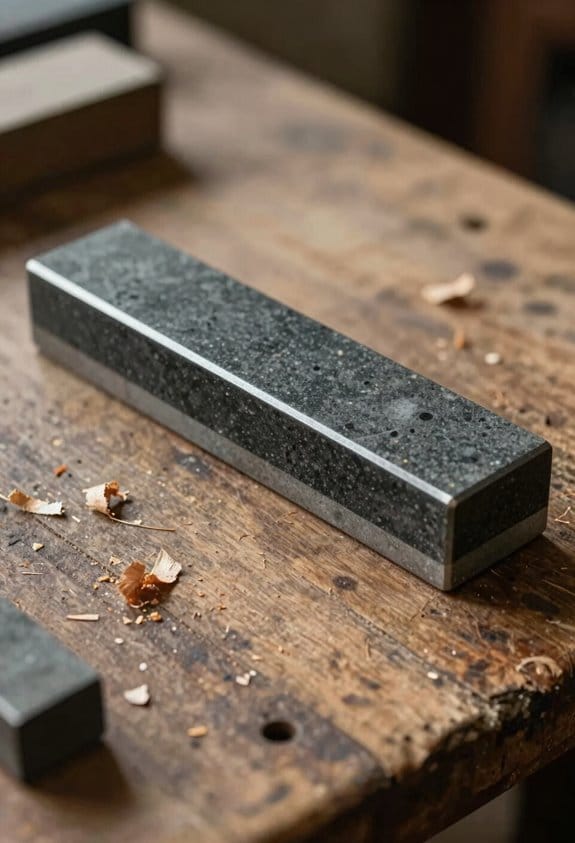
When it comes to sharpening tools, you might find yourself stuck between a rock and a hard place: waterstones or oilstones? Waterstones are all about speed, helping you get sharp edges fast. But don’t forget, they need a bit of pampering. Soaking and flattening can turn into a messy chore.
On the flip side, oilstones may not be the speed demons like waterstones, but they have their perks. They hold a flat surface longer, meaning you won’t have to fuss over maintenance as much. Plus, they’re not as picky about where you use them; there’s no messy liquid to spill all over the place, which is a blessing if you’re sharpening on the go.
So, what does this all mean for you? If dealing with a bit of mess isn’t your thing, the simpler upkeep of oilstones could be your best bet. But if you’re after that quick cutting performance, waterstones might just be what you need. Honestly, it’s about finding that balance between speed and convenience.
Try this: if you ever feel overwhelmed by the mess of waterstones, consider giving oilstones a shot. They might be just what you’re looking for in terms of usability. In the end, whether you choose waterstones or oilstones comes down to your personal preferences and sharpening needs. What’s more important to you—speed or ease of use?
Keep in mind that maintenance tips for sharpening stones like regular soaking and cleaning are crucial for preserving the performance and lifespan of your sharpening stones.
Speed Showdown: Quick Sharpening With Waterstones vs. Oilstones
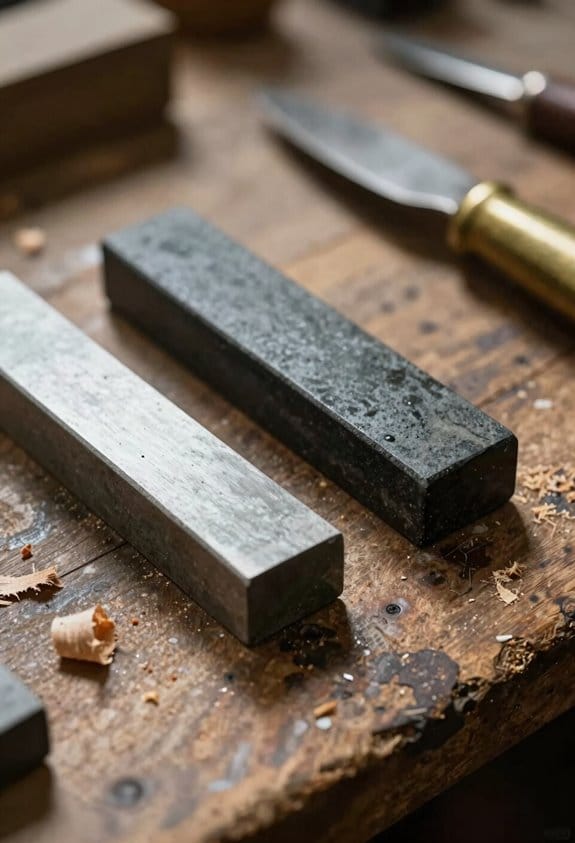
Sharpening tools can feel like a race between waterstones and oilstones. If you’re in a hurry, waterstones are pretty hard to beat. They have a fast cutting ability that lets you get the job done quickly, which is why a lot of folks reach for them during those urgent sharpening tasks. But let’s be real for a second—they can create quite the mess, splattering swarf everywhere, and you’ll need to have cold water on hand.
Now, oilstones aren’t as quick on the draw, but they definitely have their perks. One big advantage is that they require less maintenance. Plus, they tend to keep their flatness longer, which means fewer headaches when it comes to keeping them in shape. You might sacrifice a bit of speed, but oilstones can give you cutting edges that last a lot longer.
Using the right grit types for your sharpening needs can also impact both speed and the quality of the edge you achieve.
The Cleanup Challenge: Mess and Maintenance of Waterstones and Oilstones
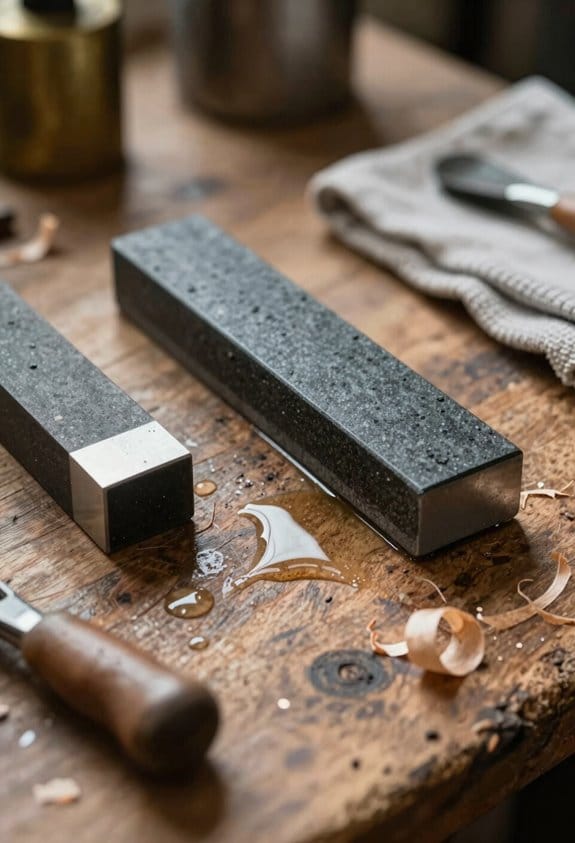
Sharpening tools can feel like a tough gig, especially when it comes to cleaning up afterward. Have you ever tried using waterstones? They cut quicker but leave a serious mess behind with all that swarf. Plus, you’ve got to soak them in cold water, which can be a real drag in the chillier months. And let’s not forget about the frequent flattening they require, which just adds to the maintenance hassle.
Now, oilstones are a whole different story. Sure, they’re messy with oil, but they actually require less cleanup overall. You can use them straight away without all the prep time it takes to get a waterstone ready. Another perk is that they help prevent rust, so you don’t have to worry about storing them outdoors. With some love and care, oilstones can last you decades, making them worthy of consideration when you weigh them against the upkeep of waterstones.
Additionally, proper maintenance tools like honing guides and sharpening stones are essential to keep your chisels and blades performing at their best.
Which Stone Lasts Longer: Waterstones vs. Oilstones?
When it comes to sharpening tools, one of the big questions is, which sharpening stone will last longer: waterstones or oilstones? If you’ve ever wrestled with cleanup after a sharpening session, you know how much that can affect your experience. Longevity is a big deal in this debate, and the differences between these stones can really influence your choice.
Oilstones generally have the upper hand when it comes to durability. Their harder materials mean they stick around a lot longer than waterstones. With proper care, you could be using an oilstone for decades. Waterstones, on the other hand, wear out much faster. You might find yourself replacing them after just a few years of regular use, which can be a letdown when you’re trying to get the most bang for your buck.
Maintenance is another area where oilstones shine. They keep their flat surfaces for a longer period, which means you won’t be spending as much time flattening them. Waterstones, however, require frequent soaking and flattening, which can feel like a chore. Plus, oilstones offer a more durable cutting edge that holds up better over time.
So, why does this matter? Well, while oilstones may cost more upfront, their longevity and the need for less maintenance can make them a more cost-effective choice in the long run. Waterstones are often more fragile, which leads to a cycle of wear and replacement that can add to your expenses.
To sum it up, if longevity and durability are your top priorities, oilstones are likely the better choice. Additionally, choosing a sharpening stone with a durable steel base can further enhance its lifespan and stability. Which stone do you think would fit your sharpening needs best?
Tips for Beginners: Choosing Between Waterstones and Oilstones
When trying to decide between waterstones and oilstones, it can feel overwhelming. Speed is one big factor; waterstones sharpen quickly, which is great if you’re in a hurry. But they require regular upkeep and can be a bit messy due to all the swarf. On the flip side, oilstones might take a bit longer, but they’re much easier to manage. They’re less messy to use since you can just apply some oil and go. If you’re a beginner, that can be a big relief.
Cost is another important consideration. Oilstones generally end up being more budget-friendly over time. Not to mention, they require less frequent replacement compared to some waterstones. So, if you’re just starting out and don’t want to break the bank, oilstones might be the way to go.
Think about what fits you best. Do you want quick results? Give waterstones a shot. But if ease of use and longevity matter more, then oilstones could be your best friend.
Ultimately, it all boils down to your personal preferences and needs. What’s your top priority when sharpening tools: speed or simplicity? It’s also helpful to consider the versatility of your sharpening stones to match different project requirements.
Flattening Required: Maintenance for Your Sharpening Stones
Have you ever struggled with dull knives because your sharpening stones just weren’t cutting it? Keeping your stones in shape is super important to keep that edge sharp. Waterstones, being a bit softer, need flattening pretty regularly—usually after just a few uses. If you don’t stay on top of this, it can really mess up your sharpening routine.
Now, oilstones are a bit more forgiving. They stay flat longer, so you only need to check on them every 10 to 14 days. That harder surface means less hassle in your maintenance routine, which is always a plus. And let’s not forget about diamond stones; they don’t require any flattening at all. They’re a maintenance-free option, which sounds great. But here’s the tricky part: even if they don’t need flattening, that doesn’t mean you can neglect them.
So, how do you keep all your sharpening stones working their best? Regular maintenance is the answer.
- Check your waterstones often, especially after intense sharpening sessions.
- Set a reminder for your oilstones; it’s easy to lose track of time.
- Don’t skip out on cleaning your diamond stones either—keeping them tidy helps their performance.
Additionally, using a nagura stone can greatly improve slurry generation and enhance the sharpening process.
Truth is, whether you’re dealing with waterstones or oilstones, maintaining a flat surface is essential for getting sharp results. So, take a little time to care for your stones, and you’ll appreciate the hassle-free sharpening that follows. After all, who wants to deal with a dull knife when there’s a simple solution?
Performance on Various Tool Materials: Waterstones vs. Oilstones
Sharpening your tools can feel like a chore, especially when you’re trying to get that perfect edge. Have you ever struggled to figure out whether to grab a waterstone or an oilstone for your high carbon steel tools? Here’s the scoop: waterstones work wonders for quickly honing those blades. You can sharpen faster with them than with oilstones, making them great for those who need a quick fix.
But don’t count out oilstones just yet. They’re made from materials like Novaculite or Aluminum Oxide, and they really shine when you’re working on carving tools or materials like O1 and A2 steel. Sure, they take longer, but the trade-off is often worth it. You’ll end up with finer scratch patterns and edges that last longer—definitely something to consider.
One thing I often hear is how messy waterstones can be. They can leave swarf and wetness everywhere, which means you’ll need to do a bit more clean-up after using them. Plus, they’ve got a softer bond that can break down pretty quickly, so you might find yourself flattening them more often than you’d like. On the flip side, oilstones are pretty low-maintenance. Less mess and less frequent need for sharpening is a big win for many.
So, what’s the bottom line? If you want speed and are dealing with high carbon steel, waterstones are the way to go. But if you’re looking for longevity and don’t mind spending a little extra time, give oilstones a shot.
It all boils down to your personal needs and the types of tools you’re using. What’s your go-to sharpening method? Remember, just like choosing the right material composition for your engineer square, selecting the proper sharpening stone material affects both performance and durability.
Common Mistakes to Avoid When Using Waterstones and Oilstones
Ever find yourself struggling to get a sharp edge on your tools? You’re not alone. When using waterstones or oilstones, there are some common mistakes that can really sabotage your efforts.
First off, let’s talk about flattening your waterstones. It’s critical to do this before you even think about sharpening. If you skip this step, you might end up with an uneven sharpening job, which can be super frustrating. Also, don’t forget to soak those waterstones well! Adequate lubrication is key. Just a quick dunk won’t cut it; give them a good soak to ensure they do their job right.
When you’re using oilstones, it’s easy to apply too much pressure without even realizing it. This can damage your stone and end up giving you a dull edge instead of a sharp one. So, keep your pressure light and steady. Remember, less is often more in this case.
Cleanliness matters too! You should regularly wipe away any swarf buildup. This stuff can really hinder the performance of your sharpening stones. Make it a habit to check your tools and keep them clean; it’ll save you headaches down the road.
And let’s not forget about the right liquids—water for your waterstones and oil for your oilstones. Using the wrong one can really mess things up and prevent you from getting a clean edge on your tools.
For best sharpening results, using a system with adjustable sharpening angles can help you maintain precise bevels tailored to your tools.
Price Expectations: Evaluating Cost and Value Over Time
Ever wonder why some folks swear by certain sharpening stones while others skip around? When it comes to sharpening tools, the cost isn’t just about what you pay upfront; it’s also about what you get out of it down the line.
Waterstones might hit your wallet a bit harder at first, but if you need quick results, they can really save you time. On the flip side, oilstones typically come at a better price from the start and tend to last longer, making them a smart pick if you’re looking for a long-term investment. You’re not just paying for the stone; you’re considering how often you’ll need to replace or maintain it.
Waterstones do require more upkeep, which means you’ll be spending some extra time cleaning up and possibly facing replacement costs sooner. Oilstones, however, can be pretty low maintenance. And don’t forget about diamond stones—they’re on the pricey side initially, but they really shine when it comes to longevity and easy care.
So, how do you choose? It often boils down to whether you value speed or cost-effectiveness more in your sharpening routine. The best part is that whatever you pick should fit your sharpening style and needs. Tools with ergonomic features, like those found in JET’s woodworking clamps, show how design can also impact user comfort and efficiency over time.
How to Pick Your Perfect Sharpening Stone
How can you choose the right sharpening stone for your needs? It can feel a bit overwhelming, but start by thinking about how fast you want to sharpen your tools. Waterstones can really speed things up and get those razor-sharp edges. But keep in mind, they do need some TLC — you’ll have to soak them and flatten them occasionally. On the other hand, oilstones may take a bit longer to get you where you want to be, but they’re durable and less messy. If you don’t want to fuss much, they could be the way to go.
Next, let’s talk about your tools. If you’re working with high carbon steel tools, oilstones might just be your best buddy. But if you’re using softer materials, you might prefer the quick action of waterstones. Have you thought about where you’ll be using these stones? Portability matters! Oilstones are typically lighter and easier to transport, while waterstones can take up more space and weight.
Also, here’s a reality check: think about how much mess you’re willing to deal with. Waterstones create a bit more swarf and cleanup afterward, while oilstones will leave behind some oily residue. So, what sounds easier for you?
In the end, it all boils down to your priorities. Are you looking for speed, durability, or convenience? Take a moment to consider what works best for you, and don’t hesitate to experiment a bit. Finding the right sharpening stone can really make a difference in your crafting experience. What will you choose? Remember that using the proper sharpening angles is essential for achieving the best edge on your knives and tools.
Frequently Asked Questions
Can I Use Both Types of Stones on the Same Tool?
Absolutely, we can use both stone types on the same tool! Considering mixed sharpening techniques can enhance our efficiency. Let’s be mindful of the tool material and follow proper stone usage guidelines for ideal results.
Do Waterstones Require Soaking Before Use?
Yes, waterstones typically require soaking before use, usually 10-15 minutes for ideal water absorption. However, some users prefer alternative methods for preparation, like splashing water on the stone, balancing soaking duration and drying time for performance.
How Do I Clean Oilstones Properly After Use?
Cleaning oilstones isn’t rocket science—just wipe ’em with a rag after use! We should use best oils and drying techniques, storage solutions help, and oilstone maintenance keeps them effective while preventing clogging for longevity.
Are Waterstones Better for Professional or Hobbyist Sharpeners?
For us, waterstones excel in professional performance due to faster sharpening and durability. However, hobbyists may prefer them for technique variety. Ultimately, user skill, project frequency, and maintenance needs shape our choice, balanced with cost comparison and tool compatibility.
Which Stone Is Safer for Knives and Delicate Tools?
Back in the day, we’d say knife safety is paramount. For delicate tools, softer stones offer better edge retention, while abrasive particles and sharpening angles affect user experience. Maintenance frequency impacts tool longevity and versatility too.


