As an Amazon Associate, we earn from qualifying purchases. Some links on this site are affiliate links at no extra cost to you. Our recommendations are based on thorough research and editorial judgment.


Calipers 101: Dial, Vernier, and Digital Calipers Explained for Joinery

When you’re diving into joinery, calipers are a must-have tool. You might be wondering which type to go for. There are three main kinds: vernier, dial, and digital.
You may be interested


Vernier calipers are a solid choice if you’re keeping an eye on your budget; they’re precise and can measure down to 0.01mm. On the other hand, dial calipers give you quick readings but can easily get misaligned, which can throw off your measurements.
Digital calipers are convenient, providing instant readings in both metric and imperial, but keep in mind, they do rely on batteries.
So, what’s the takeaway here? Think about your specific projects and what fits your needs best. If you’re looking for something reliable and low-cost, vernier calipers might be your best bet. But if speed’s important, maybe dial calipers are worth a look.
Just make sure to clean and store any calipers properly to maintain their accuracy over time. The best part is you don’t have to stress too much about which one to choose.
Just reflect on what you’ll be using it for and pick accordingly. What kind of projects do you plan on tackling? Your choice of caliper can really simplify things.
Key Takeaways
- Vernier calipers are affordable and battery-free, making them a reliable choice for accurate wood measurements in joinery.
- Digital calipers offer instant readings and switch between metric and imperial units, enhancing convenience for diverse project measurements.
- Dial calipers provide easy readings but are prone to misalignment if dropped, thus requiring careful handling during use.
- Quality stainless steel construction ensures durability and precision, regardless of the caliper type chosen for joinery projects.
- Regular calibration and maintenance, like cleaning jaws and proper storage, are essential for ensuring accurate measurements over time.
Understanding the Different Types of Calipers: Vernier, Dial, and Digital

Have you ever struggled to get accurate measurements while working on a project? Knowing the differences among calipers—Vernier, dial, and digital—can really help you nail down those precision tasks.
Vernier calipers are the old-school champs of measurement. They’re tough and pretty straightforward, letting you read down to 0.01mm thanks to that sliding scale. If you’re like me and sometimes appreciate the simpler things in life, this might be your best bet.
Dial calipers come in handy when you want quick and easy readings. They’ve got a rotating dial that gives measurements at a glance. This can be super helpful if you’re not fond of squinting at tiny numbers and just want to get on with your work.
Now, if instant feedback is what you need, check out digital calipers. With their electronic displays, you get those instant readings—often with the ability to switch between metric and imperial units. That’s a nice perk for anyone who doesn’t want to do mental gymnastics with conversions. So, why does this matter? Each type of caliper brings something different to the table.
Here’s the trick: choose your caliper based on what you value most. Need pinpoint accuracy? Go for the Vernier. Prefer speed and ease? The dial might be for you. And if you want the latest tech, splurge on digital. Just keep in mind that digital models tend to be pricier.
Many digital calipers also come with convenient features like auto-off and locking screws, enhancing battery life and measurement stability.
In the end, it’s about finding the right tool for the job without breaking the bank. What will you choose for your next project?
Recommended Products

Clear & Easy Reading – Large High-Contrast LCD:Extra-large display ensures that readings are clearly visible even at a glance, reducing fatigue and mistakes when working.

Best Cost-effectiveness: We've crafted this plastic digital caliper with a singular focus – delivering unmatched value at an unbeatable price. While others chase high-precision innovations, we prioritize essential features that truly matter.

LARGE LCD SCREEN: 42*17MM large LCD screen displaying accurate numbers up to 0.01mm, making it quick and easy to get and record accurate results. What's more, it will automatically turn off after 5 minutes of non-use
How to Use Calipers Effectively for Accurate Measurements

Have you ever struggled to get the right measurements with calipers? It’s super frustrating when you think you’ve got it right, only to find out you were way off. Here’s how to use calipers effectively to avoid those annoying mistakes.
First things first, always check that the jaws of your caliper are clean. Dirty jaws can throw off your measurements and really mess things up. Make sure they’re aligned with the object you’re measuring. For those using Vernier calipers, take a moment to carefully line up the main and Vernier scales. It might take a little practice, but interpolation can help you get even more precise measurements.
When it comes to dial calipers, the dial should be easy to read. If it’s blocked or hard to see, you’re setting yourself up for failure. Some people overlook this, but it can really affect how accurately you measure. Now, if you’re using digital calipers, don’t forget to zero the tool before you start measuring. Also, keep an eye on the battery level to ensure you’re getting consistent measurements.
Now, here’s a tip: always hold the calipers square to the object. If you’re not holding it straight, that alone can lead to inaccuracies. So, why does this matter? Well, taking a moment to ensure everything is set up right saves you time and headaches in the long run.
Additionally, choosing calipers made from high-quality stainless steel can enhance durability and accuracy throughout your projects.
Recommended Products

IP54 waterproof stainless steel : IP54 level strong waterproof, to solve the problem of ordinary digital calipers contact with water on the bad; fine polished stainless steel, so you digital calipers more hard, more durable than ordinary digital calipers
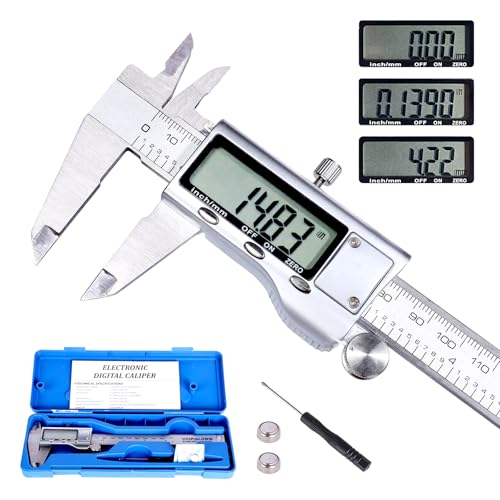
[Stainless Steel Material] : This caliper tool is made entirely of high quality stainless steel, which is dustproof, waterproof, impact resistant, rustproof hence it has a long service life.
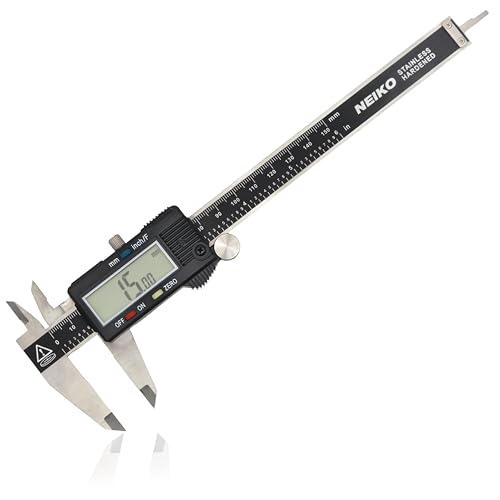
MULTI-FUNCTION: This measuring tool has a quick-change button that changes between three measuring modes such as inch, fraction, and millimeter to make conversion a snap during measurement. Our metric caliper measuring tool is splash and dust resistant.
Selecting the Best Caliper for Your Joinery Projects

Selecting the right caliper for your joinery projects can greatly impact the accuracy of your measurements. Have you ever found yourself struggling with inconsistent readings? It’s frustrating, I know. Digital calipers can be a solid choice, offering clear, instant feedback and the flexibility to switch between metric and imperial measurements.
But maybe you prefer something more traditional. Vernier calipers have their own perks. They don’t require batteries, so you never have to worry about a dead one when you need it most. Sure, they might take a little getting used to, but once you get the hang of reading them, you’ll find they’re reliable companions in the workshop.
When choosing a caliper, look for one that measures from 0 to 6 inches. This range fits most wood thicknesses and joint fittings you’ll encounter. Plus, stainless steel construction is a must. It ensures your caliper can hold up against the wear and tear of woodworking while keeping those measurements spot on over time. Regular calibration is essential to maintain the measurement accuracy and reliability of your caliper.
Recommended Products
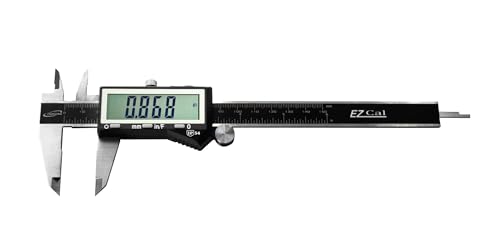
Easy read SUPER LARGE display (2-3/8"x7/8")

Ergonomic - The Electronic Caliper is light, comfortable, easy to use, and constructed with features that have made Starrett slide calipers the machinist's first choice for many years.

The dial caliper is made of stainless steel, durable and wear-resistant
Pros and Cons of Calipers
Are you trying to decide which caliper to use for your measuring needs? Every type comes with its own advantages and downsides, so it’s worth taking a closer look.
Dial calipers are great because they’re pretty straightforward and easy to read. But if you drop one, they can get misaligned, which messes with the accuracy. For something sturdy, vernier calipers are a solid choice; they have fewer moving parts and don’t rely on batteries. Just keep in mind that mastering the reading on these can take some time and practice. Honestly, do you really want to risk that learning curve?
When it comes to precision, digital calipers typically take the lead. They can measure up to four decimal places, which is impressive, but there’s a catch: they’re sensitive to things like changes in temperature and user pressure. So, if you’re not careful, you might end up with readings that aren’t as accurate as you’d hope.
Cost is another factor. If you’re on a budget, vernier calipers are usually the most affordable option. But if you’re leaning towards digital models with all their fancy features, be prepared to spend a bit more.
It’s also important to consider the measurement range and accuracy when choosing a caliper to ensure it fits the needs of your projects.
Tips for Maintaining Calipers for Long-Lasting Accuracy
Have you ever struggled with getting consistent and accurate measurements from your calipers? It can be super frustrating. With a bit of regular maintenance, you can keep your tools in top shape for years to come.
First off, cleaning is essential. Grab a soft, lint-free cloth and wipe down the jaws regularly. This helps eliminate any debris that could throw your measurements off, sometimes down to the thousandth of an inch. When you’re done using your calipers, make sure to store them in a protective case or pouch. This shields them from dust, moisture, and any potential damage.
Calibration is another crucial step that can’t be overlooked. Periodically, check your calipers against standard gauge blocks, especially after heavy use. You wouldn’t want a small error to lead to bigger problems, right? And remember, when measuring, don’t push too hard. Excessive force can bend moving parts, which will affect accuracy.
If you’re using digital calipers, keep them dry and dust-free. It’s amazing how quickly dust can accumulate and mess with the readings. Also, don’t forget to replace the batteries as needed to ensure your LCD display stays clear.
Honestly, the best part about this regular care is that it helps maintain your tools for precise work. By taking these simple steps, you could avoid headaches down the line. Have you checked your calipers lately? It’s always worth the effort!
Additionally, understanding the importance of measurement accuracy helps you appreciate why calibrating and maintaining your calipers is essential for reliable results.
Frequently Asked Questions
What Is the Difference Between Dial Calipers and Digital Calipers?
When we’re measuring, the caliper accuracy differences paint a vivid picture: dial calipers offer timeless reliability while digital calipers shine with rapid precision. Calibration methods explained show user preference insights across various industry applications, enhancing our choices.
How to Use Calipers in Woodworking?
To use calipers effectively in woodworking, we should focus on choosing the right caliper, practice proper measurement techniques, avoid common mistakes, perform regular maintenance, and understand precision for achieving accurate results in our projects.
What Are the Three Types of Calipers?
The three types of calipers—Vernier, Dial, and Digital—each offer unique measuring techniques for precision. Like a protractor comparison, maintaining our tools enhances accuracy and performance, ensuring we achieve reliable measurements with any caliper type.
How to Read a Digital Dial Caliper?
To read a digital dial caliper, we should guarantee it’s zeroed and display settings are correct. Let’s explore caliper maintenance tips, choosing brands wisely, and avoiding common mistakes for precise measurement techniques and features.


