As an Amazon Associate, we earn from qualifying purchases. Some links on this site are affiliate links at no extra cost to you. Our recommendations are based on thorough research and editorial judgment.


The Backsaw Family: Distinguishing Between Tenon, Dovetail, and Carcass Saws

Have you ever found yourself standing in the woodworking aisle, feeling completely overwhelmed by the sheer number of saws available? You’re not alone. When it comes to backsaws, there are three main types: tenon, dovetail, and carcass saws. Each serves a specific purpose, so knowing which one to grab can really help your woodworking projects turn out better.
You may be interested


Tenon saws are typically 12 to 16 inches long and feature 10-14 PPI (points per inch). They shine when making deep cuts for tenon joints. If you’re working on a project that needs those sturdy, precise joints, a tenon saw is your best bet.
Now, let’s talk about dovetail saws. These are shorter, usually around 8 to 10 inches, and they have finer teeth—about 14-16 TPI—perfect for those sharp, clean cuts in intricate joints. If you’re aiming to create dovetail joints, this is the saw you’ll want by your side.
Carcass saws are a bit of a middle ground. Ranging from 10 to 14 inches with 12-14 PPI, they offer versatility that makes them handy for a variety of cuts. If you’re not sure which saw to start with, a carcass saw could be a solid choice for general work.
So, how do you decide which one you need? Think about your specific project. Are you working on a complex joinery task? A dovetail saw is your friend. If you’re focused on something more straightforward like a tenon joint, then reach for the tenon saw.
Truth is, each of these saws has its own strengths, and using the right one can save you a lot of frustration down the road. The best part is, once you get comfortable with them, your skills will really shine.
What’s your next woodworking project, and which saw are you thinking will make it easier?
Key Takeaways
- Tenon saws are designed for deeper cuts, typically 12-16 inches long, with 10-14 points per inch for tenon joints.
- Dovetail saws feature finer teeth (14-16 TPI) and shorter blades (8-10 inches) for precision in intricate joint cuts.
- Carcass saws offer versatility, ranging from 10-14 inches and featuring 12-14 PPI for effective crosscuts and rip cuts.
- When selecting a backsaw, consider the specific joint type and project need, aligning the tool with the workpiece for quality results.
- Proper maintenance, including regular sharpening and cleaning, is essential for optimal performance and longevity of all backsaw types.
Understanding the Backsaw Family: An Overview

Have you ever found yourself staring at a collection of backsaws, wondering which one to choose? It can be a little overwhelming with all the different types. Backsaws are unique because of their metal spine, giving them extra support for those precise cuts in woodworking.
Let’s break it down. Tenon saws are your go-to for deeper cuts needed for tenon joints, typically measuring between 12 to 16 inches and having around 10-14 points per inch. If you’ve got intricate dovetail joints in mind, you’ll want a dovetail saw. These are smaller, usually about 8 to 10 inches long, with around 14-16 ppi.
Then there’s the carcass saw, which falls in the middle—measuring 10 to 14 inches and sporting 12-14 ppi. It’s versatile enough for both crosscutting and ripping cuts. So, which one do you need? It all comes down to the specific cutting task you’re facing.
Truth is, choosing the right saw can make the difference between a frustrating project and a smooth build. Each saw serves its own purpose, so think about the kind of joints you’ll be working on. Are you leaning toward tenons, dovetails, or something more general?
To sum it up, take some time to figure out your cutting needs before deciding on a backsaw. Additionally, ensuring the right tools align with your workpiece is as important as selecting precision fixtures like a cross slide vise for maintaining steady support.
Which one do you think suits your next project?
Key Distinctions Between Tenon, Dovetail, and Carcass Saws
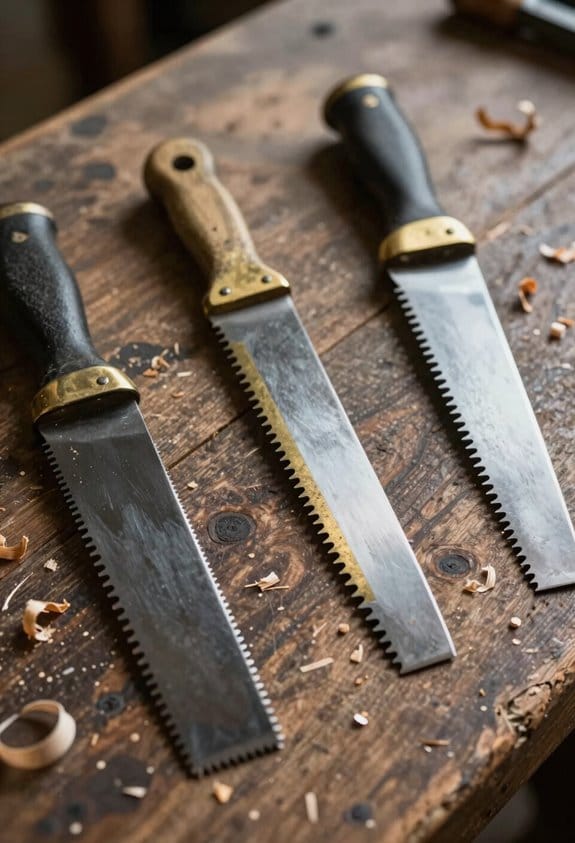
Are you struggling to pick the right saw for your woodworking projects? You’re not alone! Choosing between tenon, dovetail, and carcass saws can be tricky, but each has its strengths that can help you tackle your tasks more effectively.
Let’s break it down. The tenon saw is typically 12 to 16 inches long and is fantastic for making precise cuts. With about 10 teeth per inch (PPI), it excels at ripping and is perfect for cutting tenons. If you need clean, straight cuts with a bit more depth (around 3.5 inches), this is your go-to saw.
Now, if you’re into fine joinery like dovetails, the dovetail saw should be on your radar. Usually shorter, at 8 to 10 inches, it features finer teeth, around 14-16 PPI. This saw is all about delivering clean and sharp crosscuts, making it an essential tool for creating those beautiful joint designs. So, why does this matter? Well, the detail you can achieve with a dovetail saw can really elevate the quality of your work.
The carcass saw, measuring between 10 and 14 inches, offers a sweet spot between ripping and crosscutting. With a tooth count of 12 to 14 PPI, it provides versatility for various tasks and has a maximum depth of cut of about 2.25 inches. It might not have the depth of the tenon saw, but it’s still quite handy for a range of cuts.
Ultimately, the right saw depends on the specific needs of your project. Whether you’re cutting tenons, making dovetails, or just need a general-purpose saw, each option serves a unique purpose and can help you create with precision. Also, pairing these saws with properly maintained tools, such as a sharp wood chisel set, ensures cleaner joints and professional results. So, which saw will you reach for on your next project?
Essential Features and Uses of Tenon Saws in Joinery

When you’re tackling joinery, you might start to wonder how to make those strong joints that really hold together. That’s where the tenon saw shines. These backsaws usually measure between 12 to 16 inches long, making them perfect for cutting tenon shoulders and cheeks, which are crucial for those solid connections.
With a tooth count of 8 to 12 teeth per inch, they provide the kind of precision you need for thicker hardwoods. The spine adds a nice little bonus—rigidity—which means you get better control and straighter cuts compared to those traditional backsaws without a spine. If you’re looking to make clean cuts effortlessly, here’s the trick: try using a three-finger grip. It gives you a smooth way to guide the saw along your cut line.
But don’t think tenon saws are just for joinery work. They’re versatile enough for accurate crosscuts and handling deeper cuts on bigger projects. Honestly, having one of these in your toolbox can make a world of difference in your woodworking journey. So, next time you’re working on a project that requires precision, consider reaching for a tenon saw. How do you plan to use this handy tool in your next build?
For optimal performance, choosing a blade with the right tooth count balances precision and strength depending on the wood you’re working with.
Dovetail Backsaws: Precision for Intricate Joints
Are you trying to get your joinery just right? Dovetail saws might be the tool you need. They’re crucial for woodworkers who want precision when crafting those tight, intricate joints that everyone admires. Typically, you’ll find these saws with blades measuring 8 to 10 inches and about 15 teeth per inch (TPI), which makes them ideal for those detailed cuts in furniture making and cabinetry.
The real magic comes from their small, sharp teeth. They’re designed to provide clean edges, allowing you to make those intricate cuts necessary for dovetail joints. A rigid spine supports the blade, giving you better control and stability while you work. This means your cuts will be more accurate, which is always a win in woodworking.
Most of these saws come with handles that are smaller and ergonomically shaped for a three-finger grip. This small detail can really make a difference in maneuverability. You’ll find it easier to create those tight-fitting joints that not only look good but hold up great over time. For the best results, it’s important to maintain your tools regularly and keep the blades sharp, similar to how mortise chisels require proper care for optimal performance.
Carcass Saws: Versatility for General Purpose Cuts
You ever find yourself stuck in the middle of a project, wishing you had just the right tool to make your life a little bit easier? The carcass saw is one of those often overlooked gems that can seriously step up your woodworking game. With a blade length ranging from 10 to 14 inches and a tooth count of 12 to 14 points per inch, it’s built for effective crosscutting. You can expect a cutting depth of about 2 to 3 inches, making it handy for everything from furniture to cabinetry.
What makes this saw really shine is its 20° fleam angle, which allows the teeth to slice through the grain with ease. This means you’ll get smooth edges every time you cut. And let’s not forget about the blade width, usually sitting between 2 to 3 inches. This width strikes a balance between stability and fine control, so you can make cuts with confidence.
Many woodworkers swear by the carcass saw for its flexibility across different tasks. Whether you’re just starting or have been crafting for years, you might find it to be an essential part of your toolkit.
So, why bother adding a carcass saw to your collection? Honestly, it’s all about versatility and precision. This tool can transform how you approach certain cuts and projects. Give it a try, and you might just wonder how you ever got along without it. Pairing your saw use with quality woodworking chisels can further enhance the precision and finish of your projects.
How to Choose the Best Backsaw for Your Needs?
Choosing the right backsaw can really make a difference in your woodworking projects. So, what should you think about first? The type of cuts you plan to make. If you’re working on intricate joints, a dovetail saw is your best bet. For deeper cuts, look for a tenon saw. And if you want versatility, a carcass saw is great because it handles both crosscuts and rip cuts really well.
Next up, let’s get into blade length and tooth count. You’ll usually find a carcass saw measuring between 10 to 14 inches long, sporting around 12-14 points per inch (ppi). In contrast, tenon saws are typically around 12 to 16 inches long, with about 10 ppi. When it comes to dovetail saws, they often feature a finer tooth count of 15-20 ppi, which is perfect for those delicate details you want to nail.
Grip comfort is also key. Ever tried sawing with a tool that just doesn’t feel right in your hands? It can throw off your control and precision. So, try this: pick up a few saws and see how they feel. You’re going to want one that feels comfortable, especially if you’re tackling projects over a few hours.
Truth is, the right backsaw can help you achieve that clean cut you’re aiming for. So, while you’re picking one out, think about how you plan to use it, how it fits in your hands, and what kinds of projects you have lined up. With a bit of thought, you’ll find the perfect tool for your needs. Got any favorite saws or tips to share? Also, consider the importance of tooth design and handle comfort to improve cutting efficiency and reduce user fatigue.
Effective Handling and Grip Techniques for Backsaw Use
Ever tried using a backsaw and struggled to get those straight cuts? Mastering how you handle and grip that saw can make a world of difference. One technique that I find really helps is the three-finger grip. It’s as simple as extending your index finger, which gives you better control.
A comfy grip is crucial. You want to hold the saw firmly, but don’t grip it like you’re trying to crush it. Let the saw do the work for you. Remember, backsaws have smaller, sharper teeth, so a gentle touch yields the cleanest cuts. When it comes to vintage versus modern saws, they can feel quite different in your hand. The best advice is to pick one that feels comfortable for you.
Regular practice helps build muscle memory, which really improves your accuracy and efficiency over time. So, how do you get started? Just grab the saw and start making practice cuts. You’ll find that with each cut, your technique starts to feel more natural. But keep an eye out for any bindings; they can slow you down.
In short, handle your backsaw with care and practice consistently. Using tools that prioritize material durability can also improve your overall woodworking experience. What’s your go-to tip for making the perfect cut?
How to Maintain and Sharpen Your Saws Like a Pro?
You ever notice how a dull saw can turn a simple project into a real hassle? Keeping your backsaws sharp and well-maintained is essential if you want them to perform at their best. Start by examining the saw teeth for any damage. A saw file will be your best friend here. Just remember—crosscut saws need a 20° angle, while rip saws should be sharpened square. It’s crucial to keep each tooth even and to maintain the gullet and tooth points; this way, you won’t run into binding issues when you’re cutting.
After that, check the saw plate using a thin steel ruler. You want to make sure it’s straight—don’t underestimate how much a crooked plate can affect your cuts. It’s a good habit to clean the blade with a degreaser and a soft cloth after each use. This simple step helps prevent rust from forming. Regularly lubricating the spine will also protect your investment; a little oil goes a long way.
And remember, storing your saws properly is key. Keep them in a dry place, ideally in a case or hung on a wall where they won’t be exposed to moisture. You don’t want to deal with rust and damage later on when it’s time to get back to work. Additionally, using a stable clamping mechanism when sharpening can help maintain consistent angles and improve precision for your saw maintenance.
User Experiences: Insights From the Woodworking Community
What’s the secret to choosing the right backsaw? You’ll find that personal experiences really shape our preferences, especially in the woodworking community. For instance, many people rave about tenon saws, which usually have about 10 ppi. These saws excel at making precise cuts for tenon cheeks, making them a go-to for many woodworkers. On the other hand, carcass saws, typically ranging from 12-14 ppi, are versatile enough for general tasks.
Here’s the trick: pairing a dovetail saw, known for its 15 ppi and ability to make fine cuts, with a carcass saw is a popular combo for tackling those detailed joints. So, why does this matter? Because the right tools can make or break your project.
Don’t underestimate comfort either; being able to test out different lengths really helps. For example, a 12-inch saw can make a huge difference in how easily you maneuver. Proper tuning and maintenance is crucial as well; when your tools are in top shape, they perform better. Oh, and if you’re into vintage finds, saws like Disston get a lot of love for their durability.
In short, personal experiences guide our choices, so trying out different saws can lead you to the perfect fit. What’s your go-to backsaw that you’ve fallen in love with? Additionally, understanding factors such as blade material selection can significantly enhance your tool choices and woodworking results.
Common Projects: When to Use Each Type of Backsaw
Choosing the right backsaw can be a bit tricky, especially if you want those cuts to be clean and precise. If you’re working on joinery projects, tenon saws are your best bet. These saws typically measure between 12 to 16 inches and have 10 to 14 PPI (points per inch). They’re fantastic for crafting tenon cheeks and shoulders, which is key for solid structural joints.
When it comes to cabinetry, you’ll want to turn to dovetail saws. These compact tools are usually 8 to 10 inches long and feature 14 to 20 PPI, making them perfect for those detailed dovetail joints. Trust me, you’ll appreciate the difference when handling intricate cuts.
Now, let’s not overlook carcass saws, either. These versatile tools measure between 10 to 14 inches and have 12 to 14 PPI. They’re great for multiple cuts in furniture frames or cabinetry, making them a solid choice for various projects.
Additionally, choosing a saw with an ergonomic handle can reduce hand fatigue and improve precision during extended use.
Frequently Asked Questions
What Is the Difference Between a Tenon Saw and a Carcass Saw?
While a tenon saw sports around 10 PPI for precision cutting, we find the carcass saw’s 12 to 14 PPI ideal for detailed joints, showcasing the evolution of historical saw designs in woodworking tool maintenance and ergonomics.
What Is the Difference Between a Backsaw and a Dovetail Saw?
A backsaw’s broader blade design suits various cutting techniques, while a dovetail saw’s precision cuts, ergonomic features, and specialized historical uses make it ideal for intricate woodworking projects. Together, they enhance our craftsmanship.
What Is the Difference Between a Tenon Saw and Dovetail Saw?
A tenon saw focuses on broader cuts for wood joints, while a dovetail saw excels in precision with its finer blade tooth geometry. We appreciate their unique handle styles and historical context, enhancing our woodworking techniques.
What Is the Difference Between a Back Saw and a Tenon Saw?
A backsaw’s versatile, but a tenon saw’s specialized. From size to maintenance, we’ll explore tenon saw applications, materials, techniques, and brands, celebrating its rich history while enhancing our craftsmanship with precision and care.


